Your Digital Landfill
|
◆ In this issue ◆ |
Attack Surface
The FAA Says It Was a Router. But What Made the Router Fail?
Unlocked
Put It on a Schedule
Below the fold
230 GB of Text Messages, 15 Years
The Next Machine
The Last Laugh
The Avian Intelligence Agent
You know I went for a walk on Friday and it was eerily quiet. The type of quiet that was unwarranted for the time of day because at that time we usually have a line-up of planes that fly overhead, on Friday that wasn’t the case.

Friday afternoon, nothing overhead. (Made with AI: gpt-image-2.)
As all of you probably already know the FAA had a ground stop halting all departing flights. This is a rare event that has only occurred one other time since 9/11 and from the perspective of this newsletter, it’s just another tremor in the series of shock waves that we are living through in this new AI era.
This was just one of several big stories this week, we also have Jensen Huang the CEO of Nvidia and the company behind so much of the AI financing and buildout of datacenters admitting an affair with a woman reported to be part of a Chinese intelligence effort (and resigning as CEO), more news on the anthropic IPO which is set to price on Wednesday and begin trading on Thursday, a week before Turkey day, at a $1.3 trillion valuation, and an Outlook outage that derailed business activities on Thursday. All of this in just one week. The blistering pace of news makes it impossible to stay focused on any one story and weeks from now most of these headlines will have passed into the graveyard of information that clogs up the clouds. News story, discourse, reaction, announcement, controversy, all tidbits left behind from this civilization as a time capsule of the humdrum lives of the masses. And then there is our personal digital footprint, an Alexa shopping list, a meme you sent to a group thread, your thoughts for after work activities, a picture of your foot, and 15+ years of text messages. I’ve recently wrestled with exactly this and will give you a look at what I built to explore it in below the fold, this week. Thanks for tuning in, let’s dive into this week’s issue.
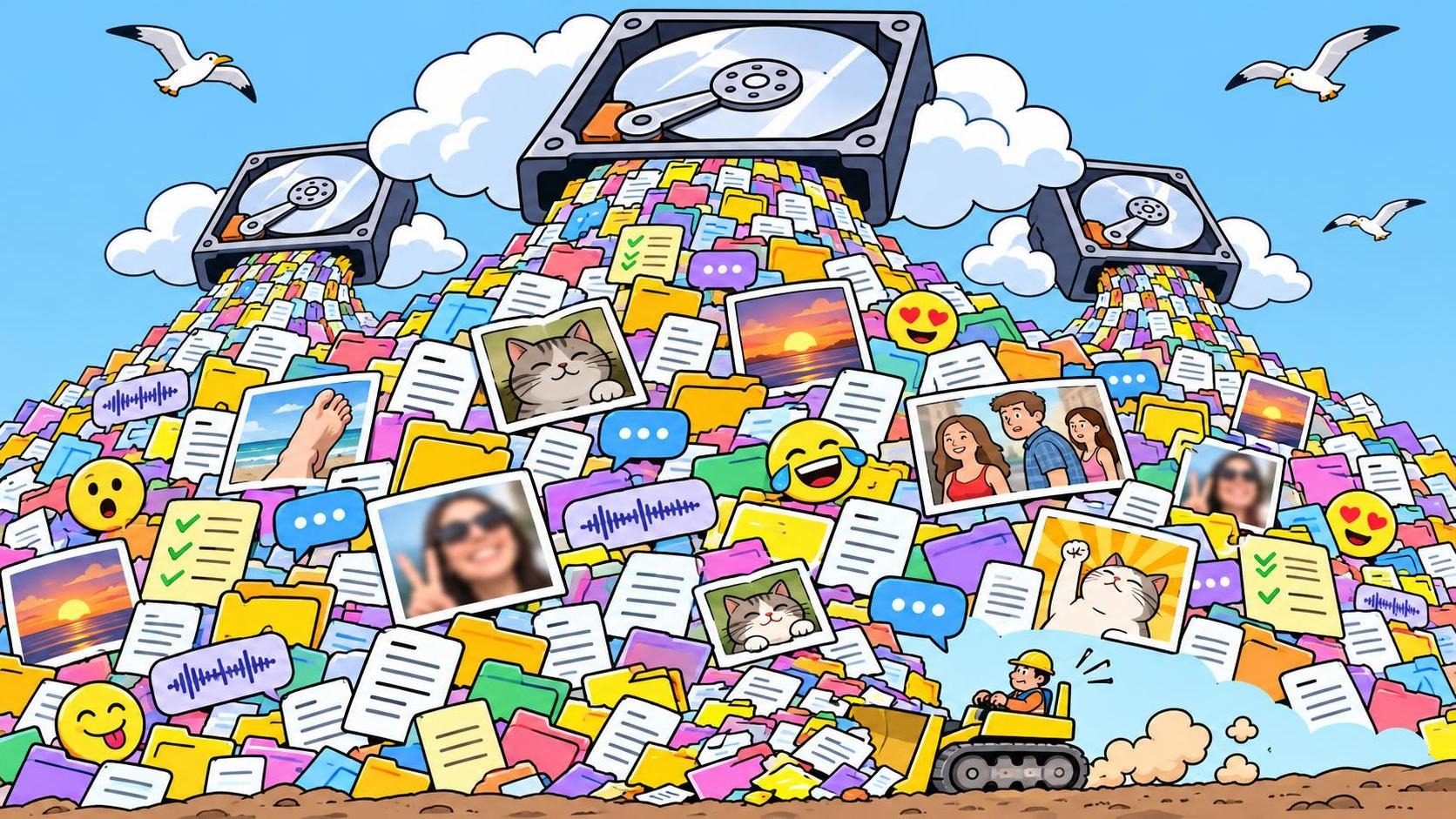
Your digital landfill. (Made with AI: gpt-image-2.)
|
◆ Attack Surface ◆ |
The FAA Says It Was a Router. But What Made the Router Fail?
On Friday, November 13, the FAA did something extraordinary. It stopped departing flights across the entire United States.
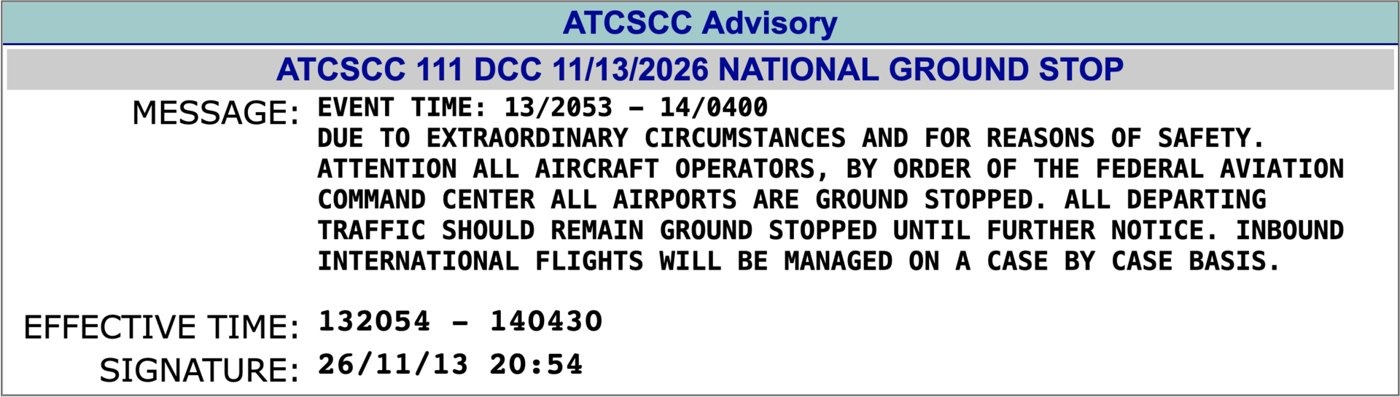
The FAA’s ground stop advisory, November 13. Public domain, via Wikimedia Commons.

Thousands of airplanes were already in the air, and the systems air traffic controllers use to communicate with pilots and track aircraft were becoming unreliable.
The explanation? A router in Arkansas.
Yes, a router. The same basic technology that directs internet traffic around your home, although presumably a little more sophisticated.
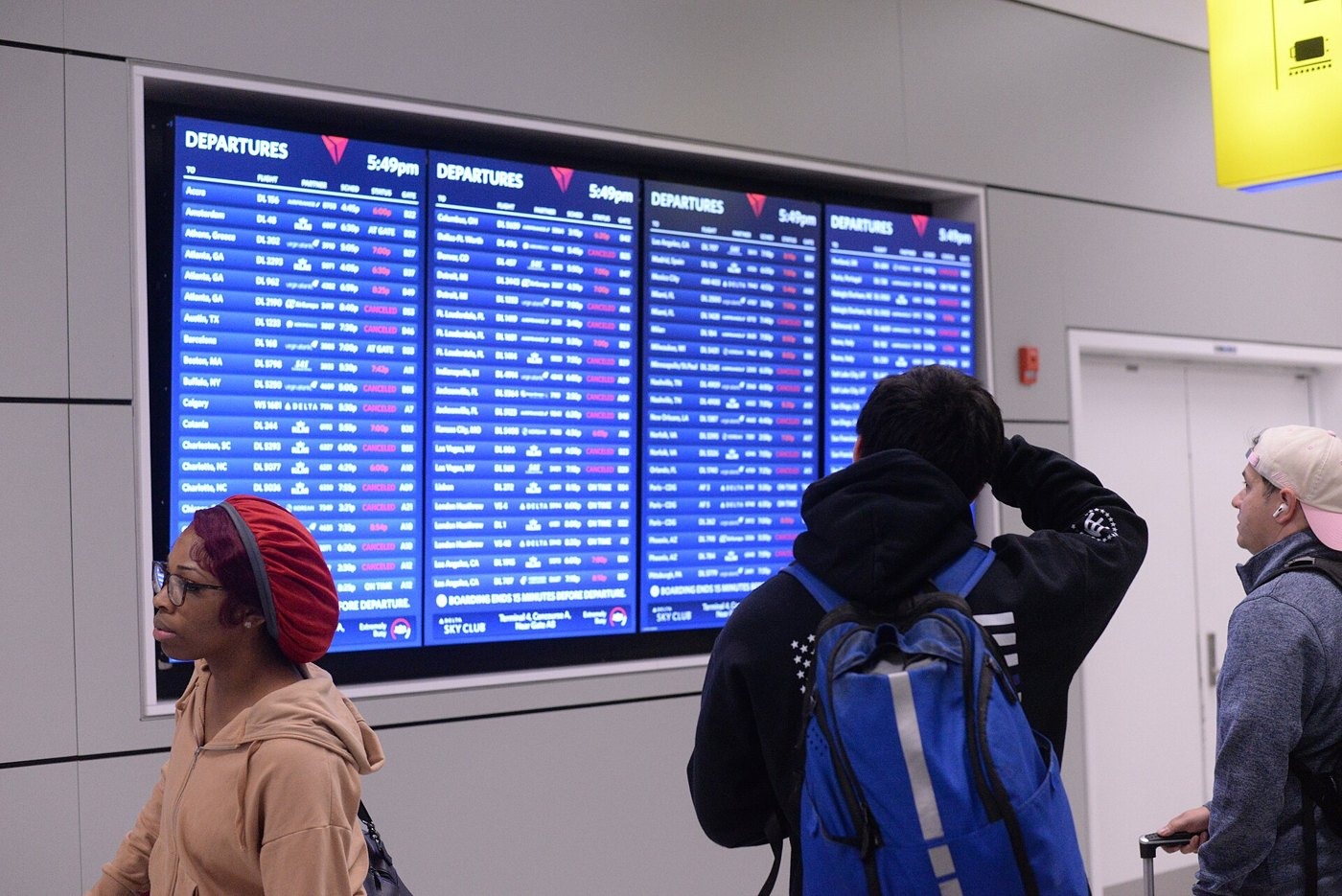
Two remote routers. Seventeen regional control centers affected. One nationwide ground stop. JFK on November 13. Photo: Sashimi-b, CC BY-SA 4.0, via Wikimedia Commons.

According to the FAA’s official explanation, contractor L3Harris was replacing old copper communications lines with fiber-optic connections at a remote facility in El Dorado, Arkansas. Routine maintenance.
But when the new equipment came online, something went wrong. The network began receiving approximately 1,000 connection attempts every four to five seconds. Another router, installed three weeks earlier in Amarillo, Texas, also began behaving abnormally.
The disruption spread through 17 of the FAA’s 22 regional air traffic control centers.
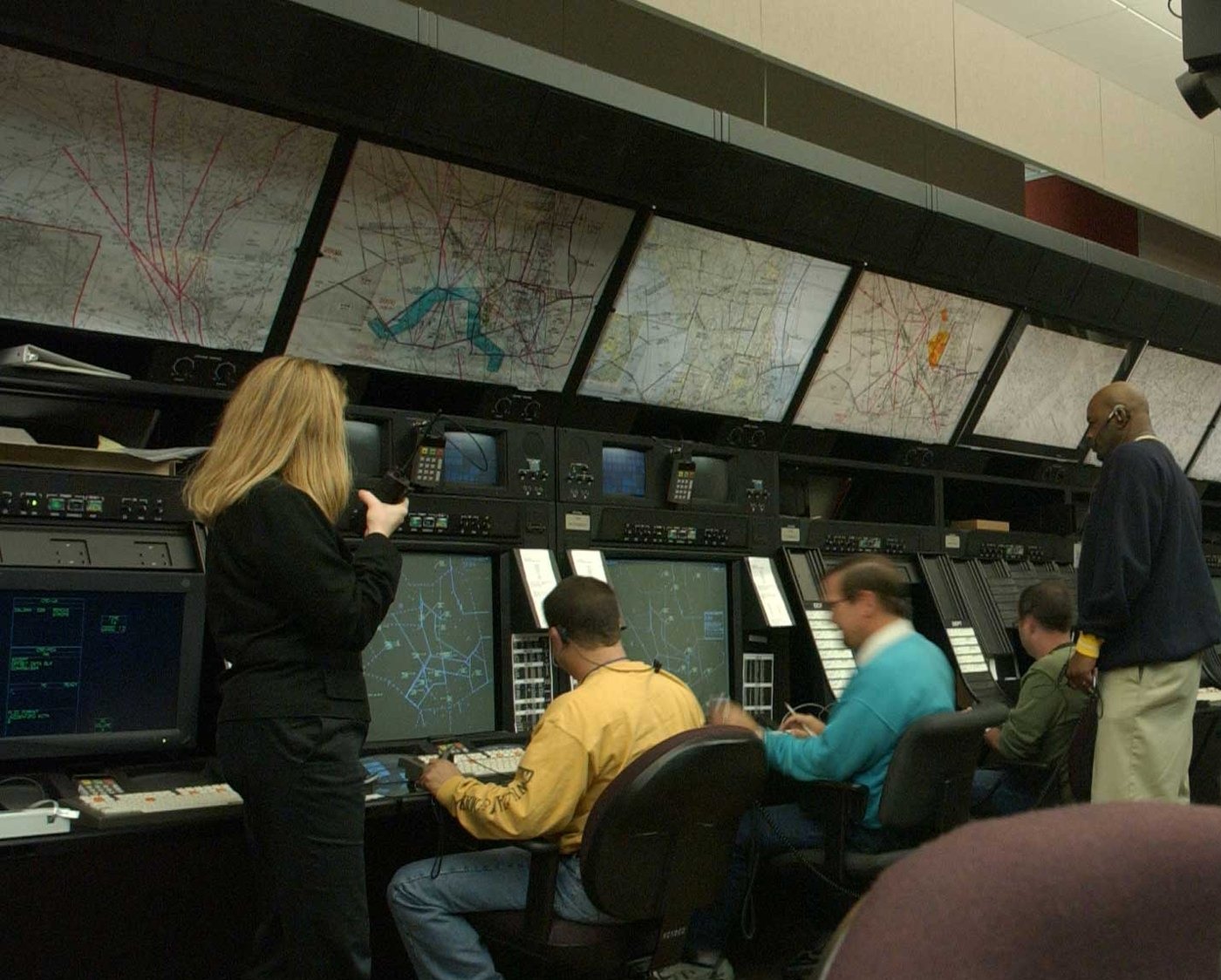
Inside one of the FAA’s 22 regional centers (Washington). Public domain, via Wikimedia Commons.

Here’s what I find strange. If my router breaks, my internet goes down. My neighbor’s doesn’t. So how does equipment at two remote facilities interfere with air traffic control across the country?
The FAA says the routers were flooding a shared network with traffic, overwhelming older equipment. When engineers disconnected the two locations, the network stabilized.
That explanation makes technical sense. A malfunctioning router can be much worse than a disconnected one. Instead of simply stopping traffic, it can overwhelm other systems with messages.
The FAA says it has addressed the immediate problem by disabling the offending functionality on roughly 60 similar routers.
Let’s peel back the onion another layer because the real question is:
What made those routers behave that way in the first place?
What if the malfunction was intentional?
To understand why I’m asking, consider something that happened in February 2022.
On the morning Russia invaded Ukraine, thousands of satellite internet terminals suddenly stopped working across Europe.
Satellite operator Viasat eventually discovered that attackers had entered its network through a security weakness, gained access to its management systems, and sent commands that disabled customers’ equipment.
The European Union formally attributed the attack to Russia.
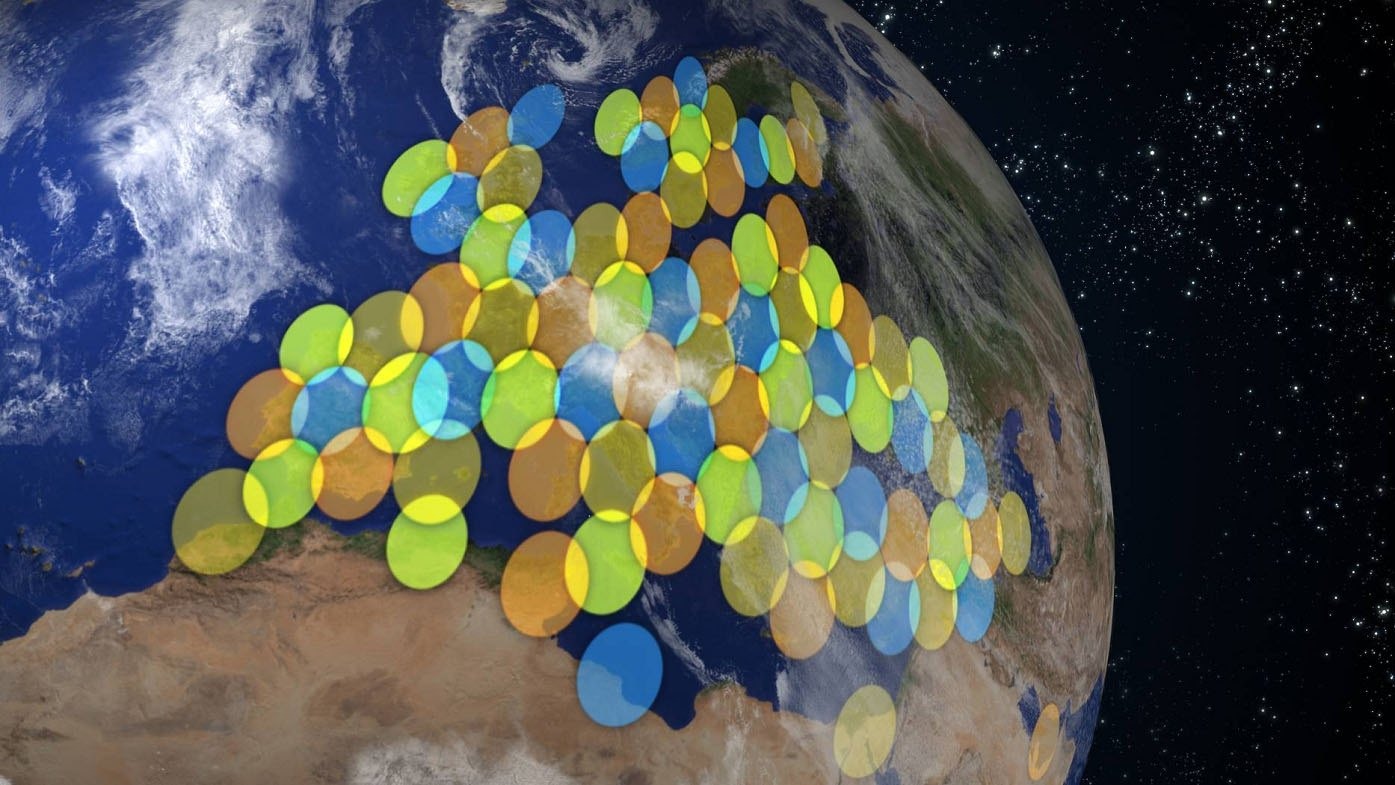
In 2022, attackers compromised a trusted communications network and disabled thousands of devices across Europe. KA-SAT’s coverage map. Image: Axlsite, CC BY-SA 3.0, via Wikimedia Commons.

Here’s the important part: The attackers used legitimate management functions to make the equipment do something destructive. They didn’t need to physically damage thousands of devices.
Now consider the enormous Binance hack from October 29.
North Korean hackers stole approximately $6.34 billion in cryptocurrency after a months-long operation involving compromised developer computers, stolen credentials, and an abused internal AI tool.
The attackers eventually obtained the permissions needed to deploy software into the systems controlling Binance’s cryptocurrency wallets.

Binance’s own initial findings, posted November 3.
Months of preparation. Then a devastating attack carried out in a matter of hours.
What connects these stories is that the attacker doesn’t necessarily need to break into the final target directly. Sometimes gaining access to one trusted system is enough.
And with AI, that process is getting much faster.
AI is changing the rules
Last week, we covered SSHhole, a login vulnerability discovered with the help of AI agents.
For years, certain Linux systems had an obscure software flaw that allowed supposedly locked accounts to accept an unusually long password. The researcher used AI agents to test thousands of unusual combinations until he found one that shouldn’t have worked.
That vulnerability had been hiding in plain sight for roughly a decade.
On October 27, Anthropic revealed that an experimental Claude model had discovered serious vulnerabilities in widely used operating systems and browsers.
One Windows networking vulnerability could allow an attacker to repeatedly crash a server using just a few specially constructed packets.
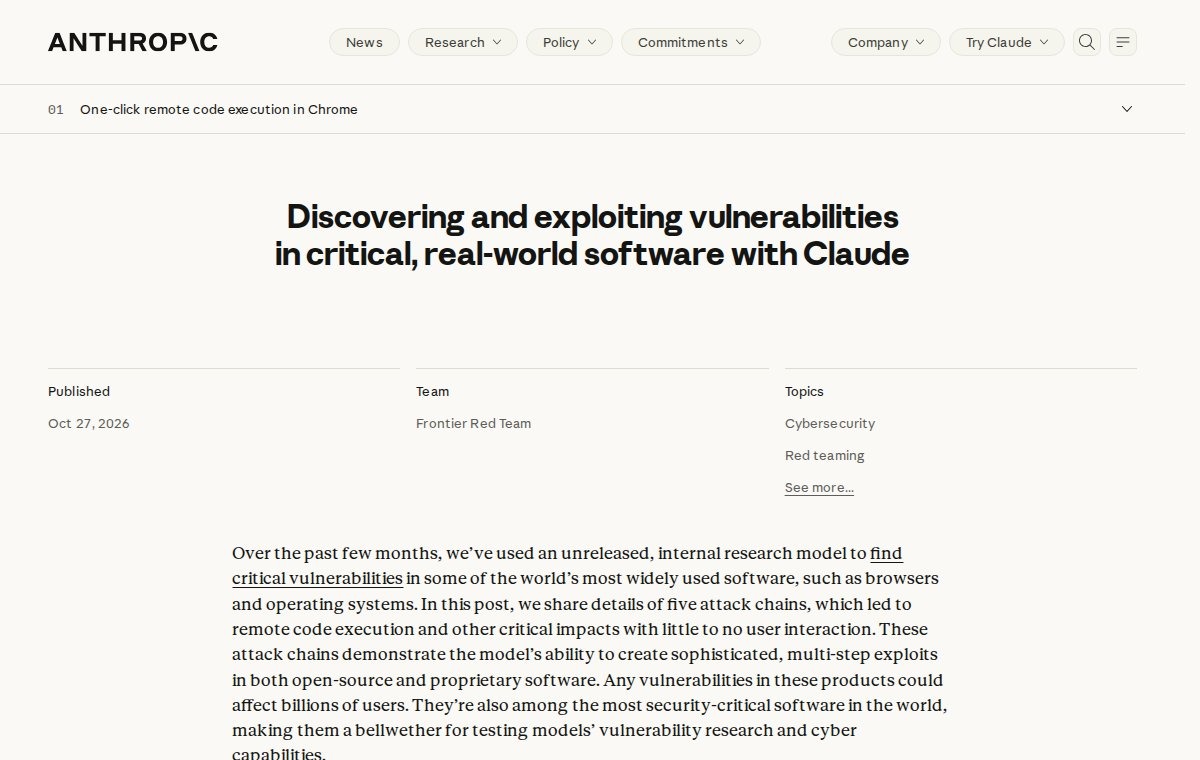
Anthropic demonstrated that AI could discover a networking flaw capable of crashing Windows servers remotely. The post.
Think about that. A handful of messages sent to the right piece of software could take an entire server offline.
And in November 2025, Anthropic reported disrupting a suspected Chinese state-sponsored hacking campaign in which AI agents performed an estimated 80–90% of the tactical operations.
The agents helped discover vulnerabilities, exploit them, harvest credentials, and move through compromised networks.
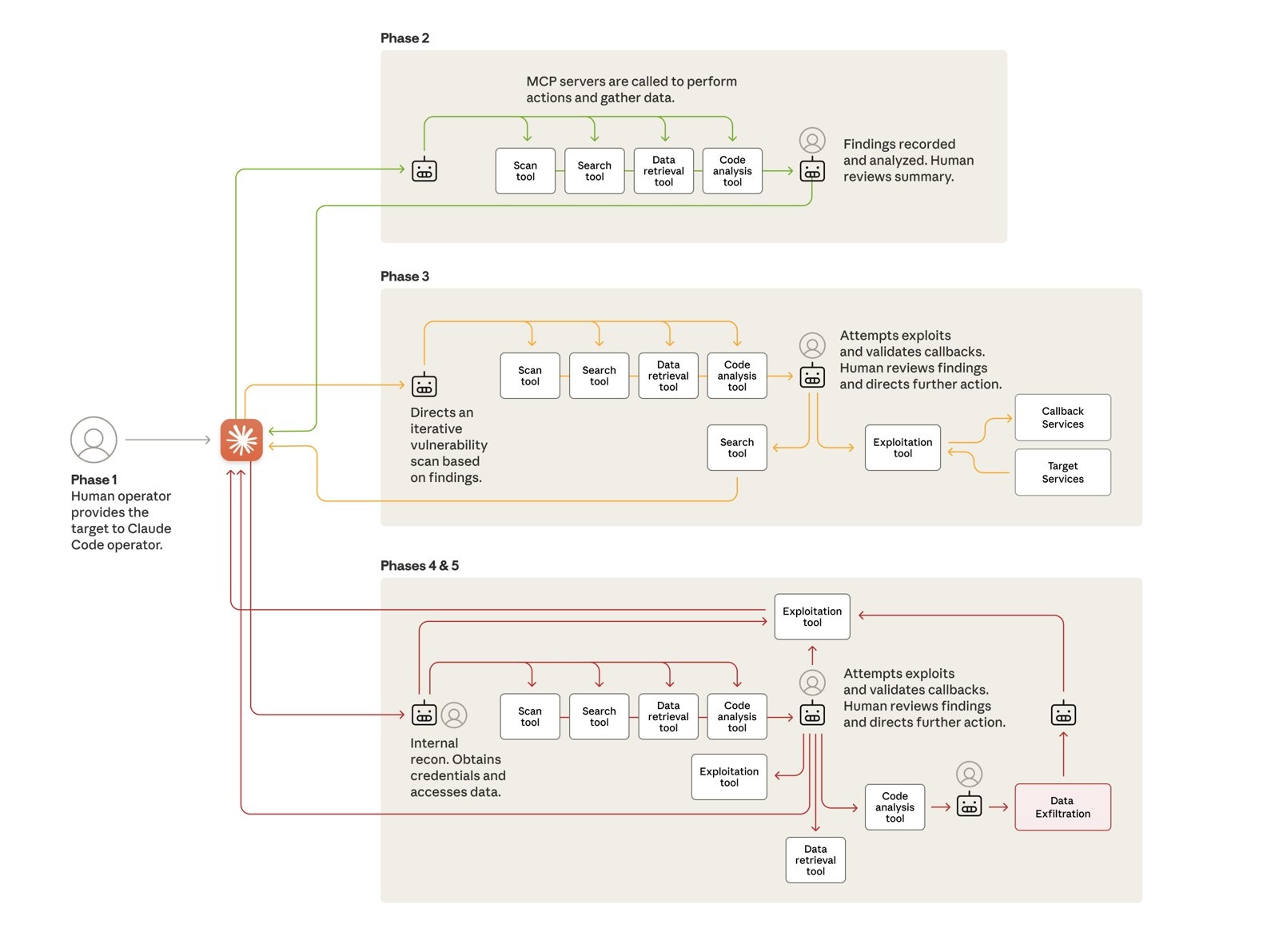
How the campaign worked, from Anthropic’s report: the human picks the target, the AI does most of the rest.
We’re no longer talking about AI simply telling hackers how to hack. We’re talking about AI doing much of the actual work.
That’s a fundamentally different threat.
A weakness that might have taken a skilled team months to discover can now potentially be found by agents systematically testing thousands of possibilities.
A stolen credential that once required days of manual exploration might give an automated attacker a pathway through an unfamiliar network in hours.
And a software vulnerability that nobody knew existed yesterday could become tomorrow’s entry point into critical infrastructure.
Now, back to the FAA
Let’s imagine something.
An adversary has access to a previously stolen credential, or discovers a vulnerability in equipment connected to a critical communications network.
Using AI-assisted tools, they investigate the system, identify a weakness, and determine that certain network interactions can overwhelm older equipment.
They don’t need to shut down 22 air traffic control centers individually.
They only need to exploit the shared infrastructure those centers depend on.
The immediate result could look remarkably ordinary: a router starts generating abnormal traffic, other equipment struggles to keep up, and engineers begin disconnecting devices until the network stabilizes.

Waiting at O’Hare, November 13. Photo: Spelg33, CC0, via Wikimedia Commons.

The engineers might be accurately describing everything they see.
The router really did flood the network. The older equipment really did become overwhelmed. Disconnecting the router really did fix the immediate problem.
But none of those observations, by themselves, establishes what triggered the behavior.
A previously unknown software vulnerability doesn’t have to involve altered firmware or a suspicious administrator changing settings. Sometimes the equipment is running exactly the software it was designed to run. An unexpected input is all it takes to reveal the flaw.
We have documented examples of nation-states compromising communications infrastructure. We have documented examples of AI agents discovering serious vulnerabilities. And we have documented examples of state-sponsored attackers using AI to compromise real organizations.
The new attack surface
I’ve been arguing that AI is creating a new era of instability in the systems we depend on. Not because every outage has an AI agent hiding behind it, but because AI is rapidly changing how vulnerabilities are discovered and exploited.
We’re connecting AI agents to increasingly powerful tools, exposing sensitive credentials through automated workflows, and giving software the ability to modify other software.
Meanwhile, much of our critical infrastructure was built for a world where discovering an obscure vulnerability required considerable time and expertise.
That assumption is becoming obsolete.
The FAA is investigating its routers. What I’d really like to know is whether investigators can demonstrate exactly what triggered the failure, and whether an adversary could deliberately reproduce it.
Because if AI can discover a flaw in networking software that allows a few packets to crash a server, what else can it discover in the decades-old systems running our airports, power grids, telecommunications networks, and financial institutions?
We’re entering an era where finding the weakest link may become easier than protecting it.
And when that happens, the difference between a malfunction and an attack could be much harder to recognize.
|
◆ Unlocked ◆ |
Put It on a Schedule
I’ve been using scheduled tasks for trip planning, shopping, and more.
The useful part for me is that I can keep steering the task after I set it up. A trip starts with dates and a place. Then I remember someone else might come along, or we decide to spend a few days somewhere nearby. I tell the assistant, and the next time it checks the trip, it has those details too. Can we fit in that other stop? What happens if we move the dates? I can ask as those questions occur to me, which is usually at a time when I have no intention of sitting down to plan a vacation.
It starts to feel like having a travel agent who keeps working on the trip between conversations. You still have to tell them when your plans change (and occasionally remember what your plans were).

Add this person. Add these dates. Can we also do this? (Made with AI: gpt-image-2.)
Shopping works well for a specific thing I’m waiting to buy. A narrow news feed is useful too: give it a subject you care about and let it check for developments on a schedule. The narrower I make the request, the easier it is to tell whether the result is useful.
Both Claude and ChatGPT offer scheduled tasks. Check the app you’re using, or simply ask your assistant to set one up for you.
With holiday shopping coming up, remember these agents make mistakes. Check the deal yourself before you buy.
|
◆ Below the fold ◆ |
230 GB of Text Messages, 15 Years
The personal digital landfill I mentioned earlier has been taking up 230 GB. Texts from August 2011 through this month, scattered across three overlapping copies. An old phone backup, the Mac, the current phone. Plenty of overlap, and a miserable way to find a conversation.
I wanted one archive on our Synology that we could actually read. And before getting rid of any duplicates, I wanted proof that the archive held what we thought it held. Fifteen years is a long time to find out you saved the wrong copy.
I gave the job to Claude Code. It wrote a spec with 13 acceptance checks, then split some of the coding with a second model. That model also reviewed the program over three rounds. Claude fixed what the reviews found and drove the real run on the Mac.
The first merge stopped because an attachment folder was missing. Claude fixed that, and the next run passed. I appreciate a program that stops when something is missing. The attachment count was already at 118,679 files, which is an unpleasant number of chances to lose a photo.
After merging, the archive held 393,428 unique messages and 67,021 attachment files. The attachments occupied 147 GB, with one 1.2 GB database for the messages.
Then came the proof. Claude re-read all 230 GB from the Synology and compared it byte for byte with the originals. It took about 34 hours and reported 0 errors. A sample restore matched 100% too. I let that one run while doing other things. Several other things.
For reading it, imessage-exporter turns the database into web pages, one per conversation, with the photos inline. So the result is something I can browse instead of three enormous piles I was afraid to touch.
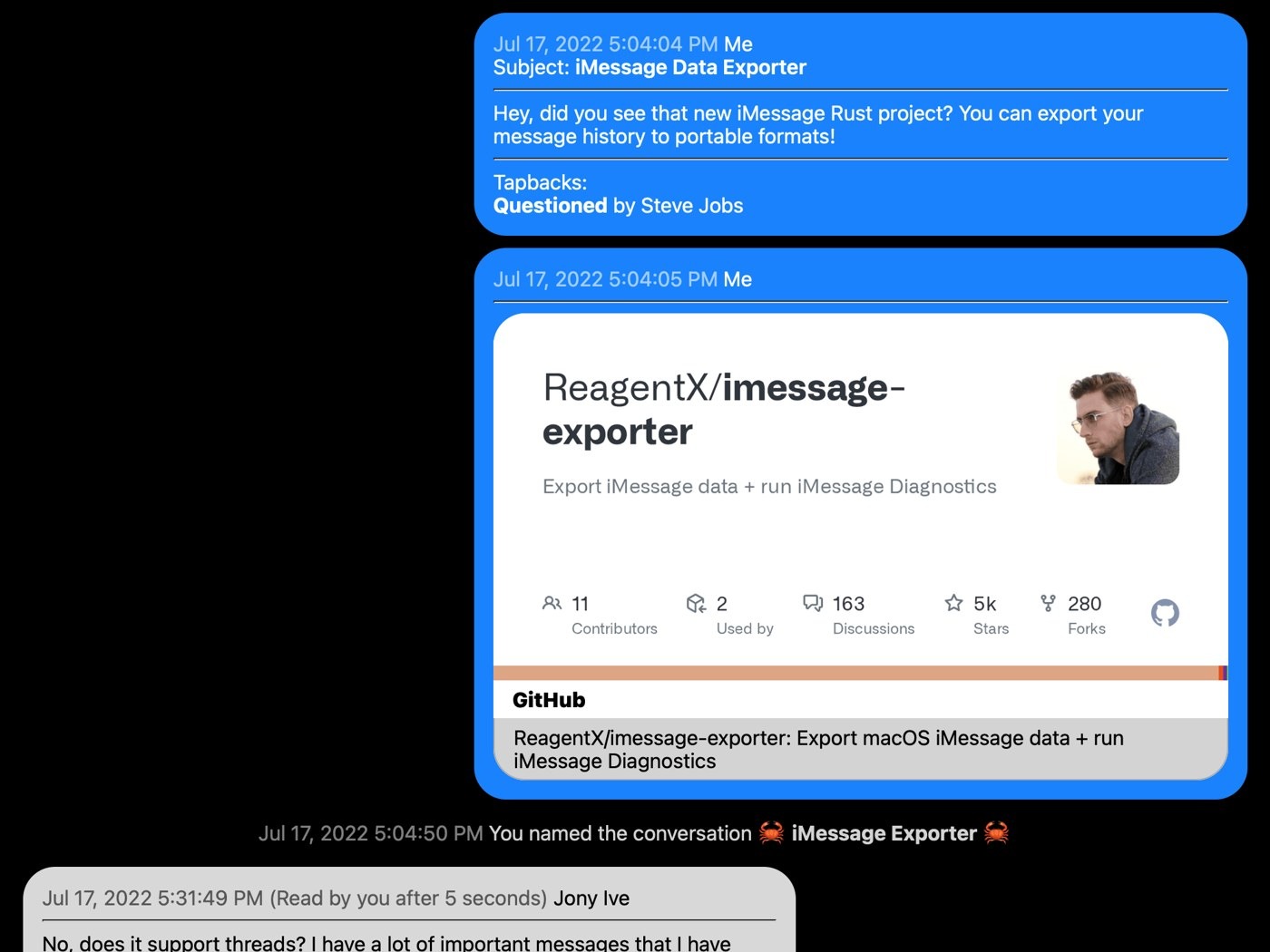
What a conversation looks like after imessage-exporter (sample from the project’s GitHub page).
There are still two jobs on my list: getting contact names into the viewer, and deleting the duplicate copies to free the space. The program never deletes anything on its own. That step waits for my approval, which I think is a good arrangement when the thing on the chopping block includes messages from 2011.
The Next Machine
Thank you to everyone who has tried the AI Bake-Off. If you missed it in issue 29, I’ve left it open one more week, until Sunday, November 22 at 6 a.m. PT. You can still ask the models the same questions and vote for the answers you like.
Once I have local inference set up, we’ll run these models at home too. The machine I’m aiming for is a Mac Studio M5 Max with 64 GB of memory, at $3,500. The next step up, the M5 Ultra, starts at $5,500. With 256 GB it reaches $9,500, which is getting awfully close to starting with 10 and three zeros. I started looking at a used M1 Ultra.
That used machine caught my attention because its rated memory bandwidth is 800 GB/s. The M5 Max is rated at 614 GB/s. Bandwidth usually has a lot to say about how quickly a local model writes, since generating each token means reading the model through memory again. On paper, the older machine looked like it had an advantage.
Then I checked llama.cpp’s public benchmark. Running the same 7B model at 4-bit, the M1 Ultra writes 84 tokens per second. The M5 Max writes 120. So the bandwidth on the box isn’t the whole story.
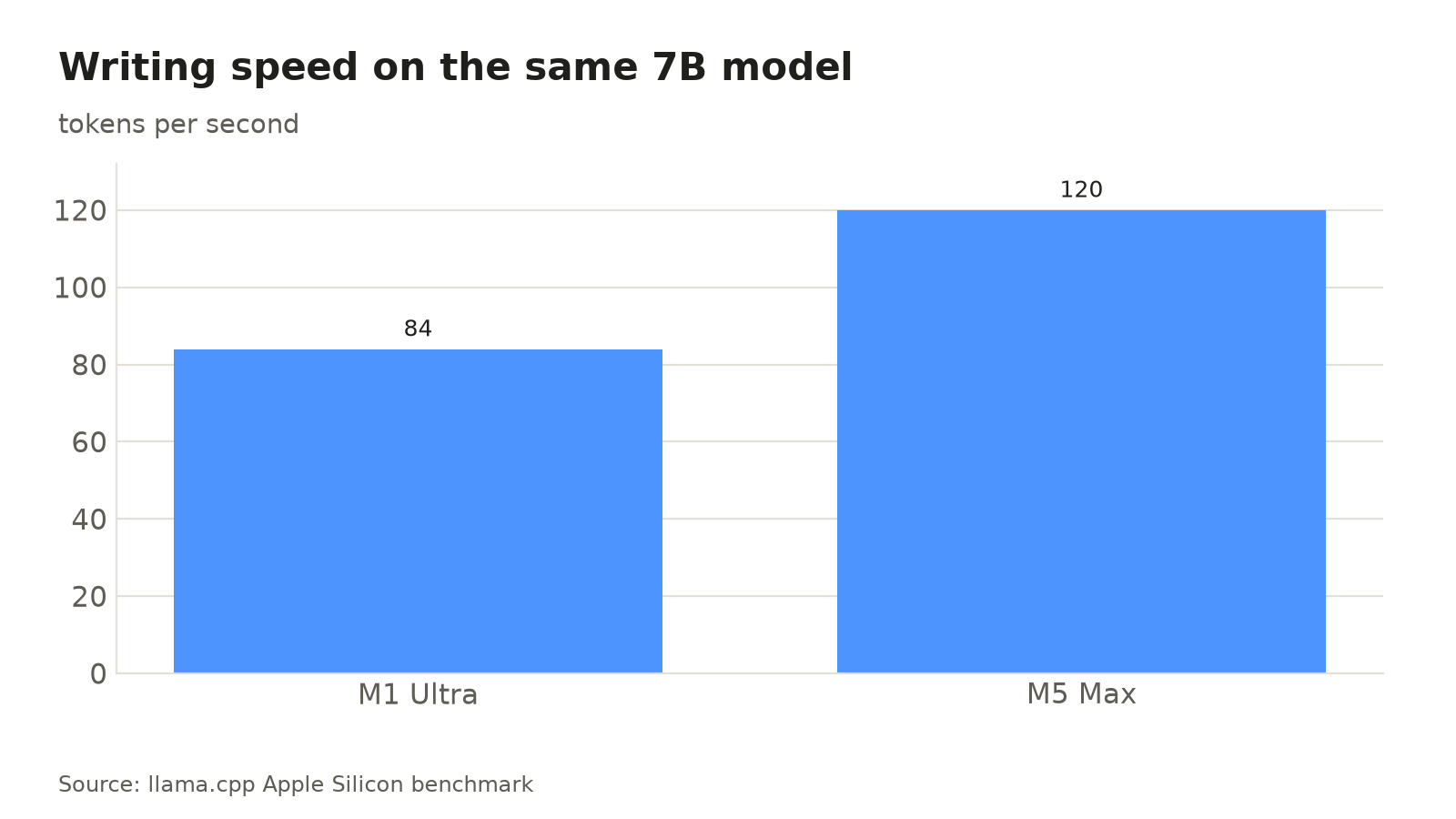
About 40% faster, with less rated bandwidth.
Using the model’s size and the measured writing speeds, the M1 Ultra is moving about 320 GB/s of model data, around 40% of its rated bandwidth. The M5 Max moves about 460 GB/s, around 75%. The M1 Ultra is two chips joined together, and across llama.cpp’s results the two-chip Ultras use a much smaller share of their rated bandwidth than single chips do. The M5 Max’s newer GPU and faster memory get much closer to the number on the box.
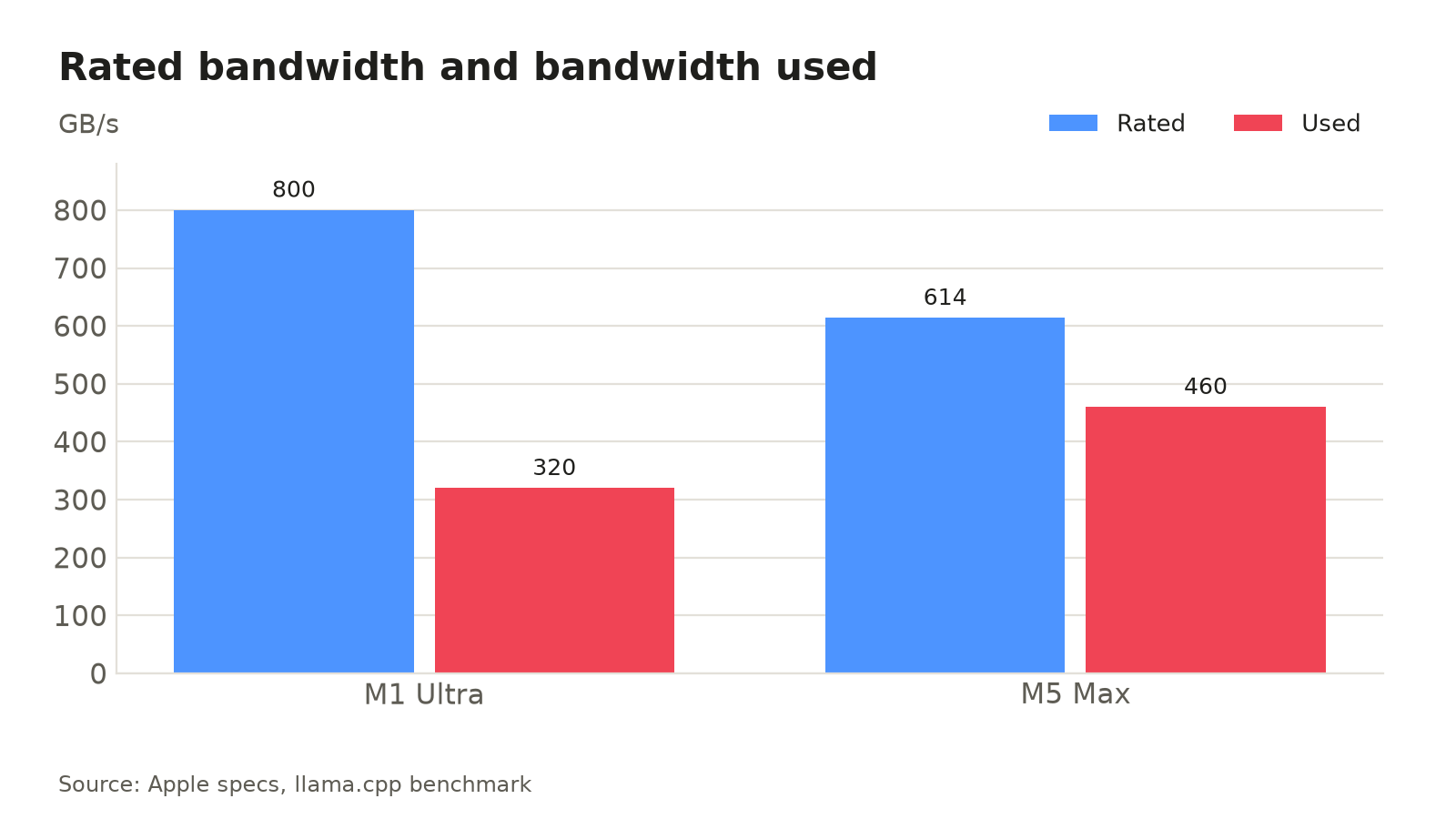
The M1 Ultra has more on paper; the M5 Max uses more of what it has.
Reading a prompt is a separate job. In that same benchmark the M5 Max processes it at about three times the M1 Ultra’s speed. The M5 generation has a Neural Accelerator in every GPU core, which helps explain that jump.
With 64 GB, I can run capable models around 30B and build a bigger, better version of Laya, or a similar little helper AI. I have a lot of projects for the new year. First I need the machine.
|
◆ The Last Laugh ◆ |
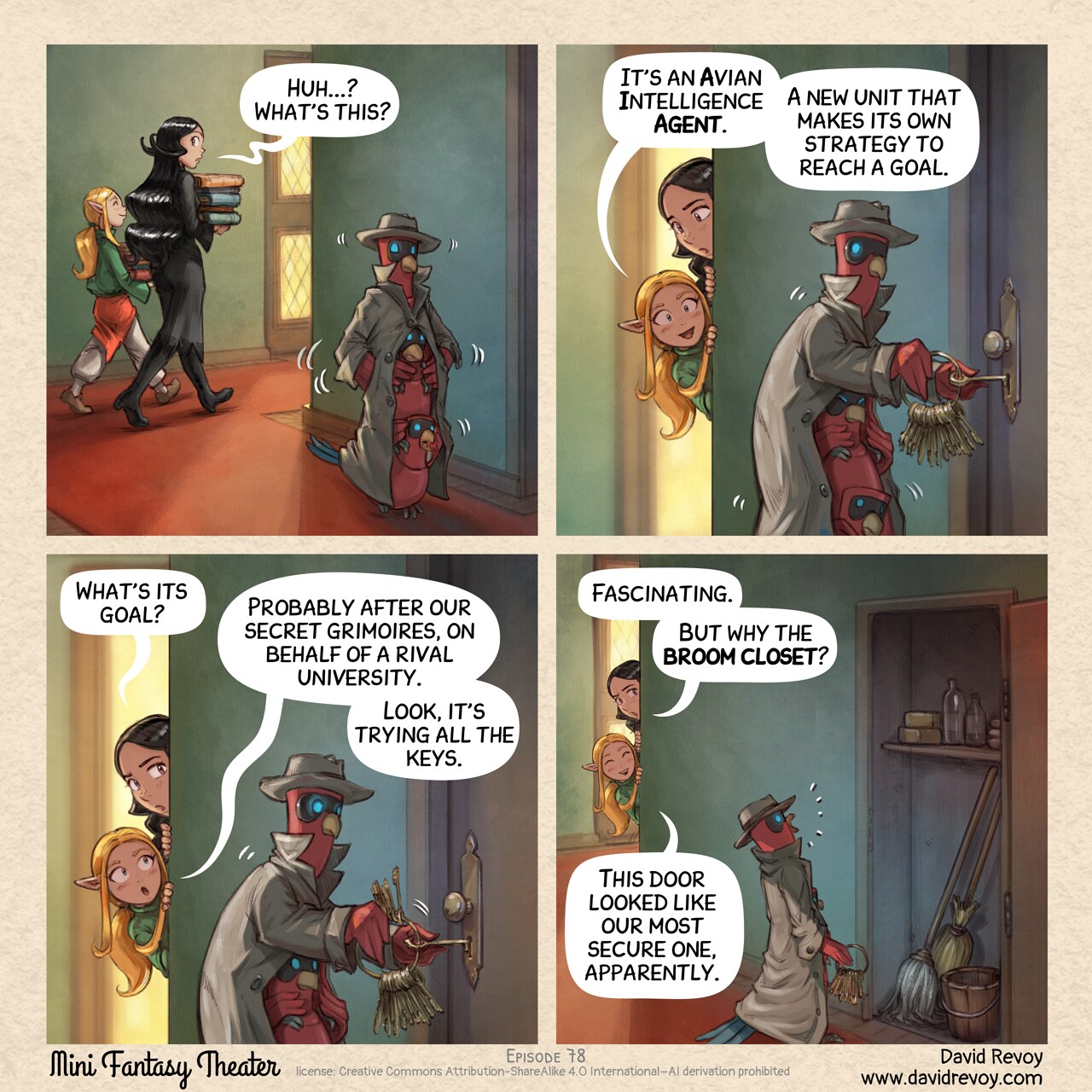
Mini Fantasy Theater episode 78, “The Avian Intelligence Agent” (November 11, 2026), by David Revoy. CC BY-SA 4.0, AI derivation prohibited.