Built, Not Coded
Confession before we start: Wundervault Weekly is arriving on a Sunday this week. If you’re used to finding it on Saturday, your calendar isn’t broken. I am. I got so far down a rabbit hole building the thing I’m about to show you that the deadline rolled right past me while I wasn’t looking.
Which leaves only the question that actually matters this morning: did anyone notice? Be honest, I can take it. (I cannot take it.)
The Confident Wrong Answer
Here’s the thing about working with AI all day that nobody warns you about. It lulls you. You ask it five questions, it nails all five, and somewhere around the sixth your guard quietly drops. You stop reading carefully. You start trusting. And that is precisely the moment it hands you a beautifully formatted, totally confident, completely made-up answer, in the exact same calm voice it used for the five true ones.
One of you lived this last week. They asked ChatGPT how to do a specific thing in Asana, the project-management tool. The instructions came back crisp and assured: click here, then this menu, then that setting. Step by step, no hedging. The only problem was that the menu it described did not exist. None of it did. It had invented a tidy little tour of a piece of software that was never built. A hallucination with perfect posture.
That is the trap. A wrong answer that sounds unsure puts you on alert. A wrong answer delivered with total confidence, right after a streak of correct ones, sails straight through. The model isn’t lying to you on purpose. It genuinely has no idea which of its answers are real and which it dreamed up, and it says all of them the same way. So the job that quietly falls to you, the human, is to stay a little suspicious even when you’re being told exactly what you want to hear. The first five right answers are not a promise about the sixth.
Keep that feeling in your pocket. It’s the whole reason the rest of this issue worked.
Speaking of Things Getting Expensive
Quick news note, because it landed this week and a few of you wrote in about it. Apple raised prices across the board: MacBooks, iPads, the HomePod, Apple TV, the Vision Pro, some of them by as much as $300. The reason they gave is a shortage of memory and storage chips, made worse by everyone racing to build AI data centers and hoover up the same components.
If that sounds familiar, it should. Way back in Issue #3, “Everything Is Expensive,” we asked whether the chip shortage was real and whether AI was the thing driving it, and the short answer was yes and yes. This is that prediction arriving on your doorstep with a price tag stapled to it. The same boom that lets me build a whole website by talking to a computer is the boom quietly making your next laptop cost more. The juice and the squeeze, once again, holding hands.
Maybe Code Isn’t for Everyone. The Building Might Be.
I want to talk about something called Claude Design, and to do it I have to show you what I actually made with it this week.
A little context. Silken windhounds are a breed of dog (think a smaller, sleeker version of the borzoi, all flowing coat and whippet speed), and every year there’s a big gathering for them. This year it’s called Silkenfest 2026. The folks running it needed a real website, the kind with a schedule, entry forms, a fundraiser, a map of where to stay. The kind of thing that normally means hiring a developer, waiting weeks, and paying for the privilege. Instead, I built the whole thing by describing what I wanted, in plain English, to Claude. Here’s the front of it:
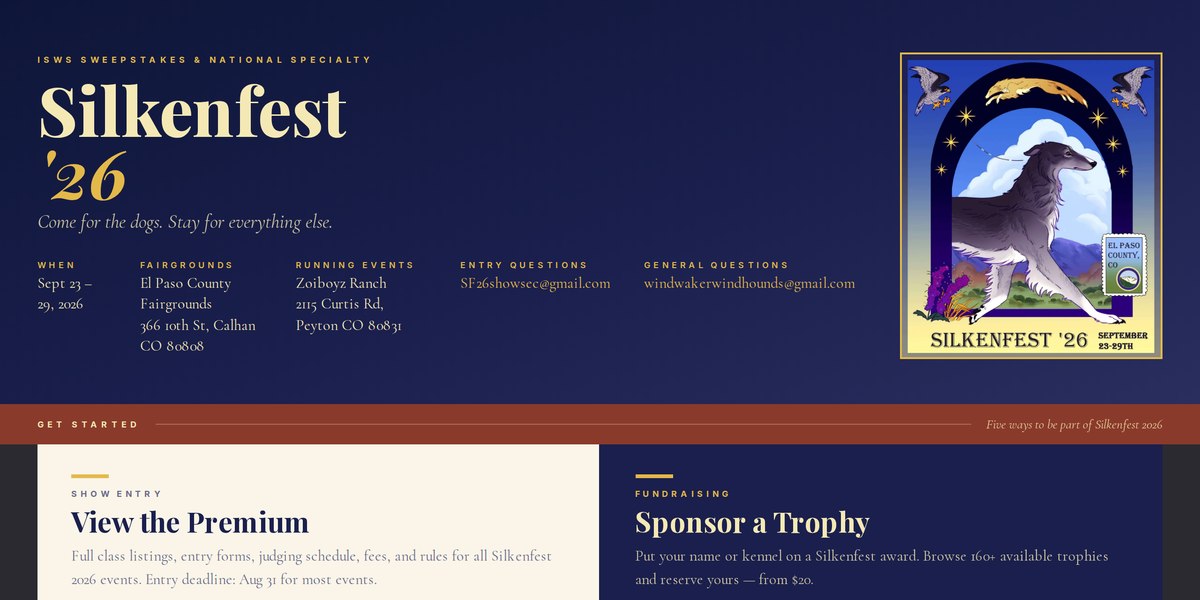
Silkenfest 2026. I didn’t write a line of code. I just described it. (Click to visit the real site.)
Now, “learn to code” has been the advice for a decade, and honestly, for most people it’s bad advice. Most of us don’t want to learn to code any more than we want to learn to rebuild a transmission. We just want to get somewhere. What’s changed is that you no longer have to. You can describe the destination and let the tool handle the engine. But, and this is the whole point of today, it works far better when you understand a few moves. Let me show you the ones that made this site good instead of mediocre.
1. The galloping dog, and why I used three different AIs
My favorite piece of the site is a little silken windhound that gallops across the screen. I’m genuinely delighted by it. But getting there was a tour of exactly where these tools shine and where they fall on their faces.
First I asked Claude to just draw me a galloping silken windhound. The result looked like a child’s refrigerator drawing. Lovingly intended, deeply wrong, four legs of roughly suggested dog. Claude is brilliant at many things; sketching a specific dog breed from scratch is not one of them. So I changed tactics. I found a real running-animation reference of greyhounds (a proper galloping cycle, frame by frame) and sent those frames to a different tool, an image model called Nano Banana, with one job: keep the motion, turn these greyhounds into silken windhounds. That it could do beautifully.
That’s the lesson I keep relearning: there is real value in not marrying a single AI. Claude is the one I plan and build with. A dedicated image model does the picture-making. The skill isn’t loyalty to one assistant, it’s knowing which one to hand each part of the job. Same as you wouldn’t ask your plumber to do your taxes, even if he’s a lovely man.
One snag remained. When I dropped the new frames in, the dog’s body jumped around between frames and the gallop came out choppy, like a flipbook drawn by a nervous hand. So I went back to Claude Design and just said so: line these frames up on the body, even out the spacing, make the run smooth. And it did. Here’s the dog that resulted, doing exactly what a dog should do:
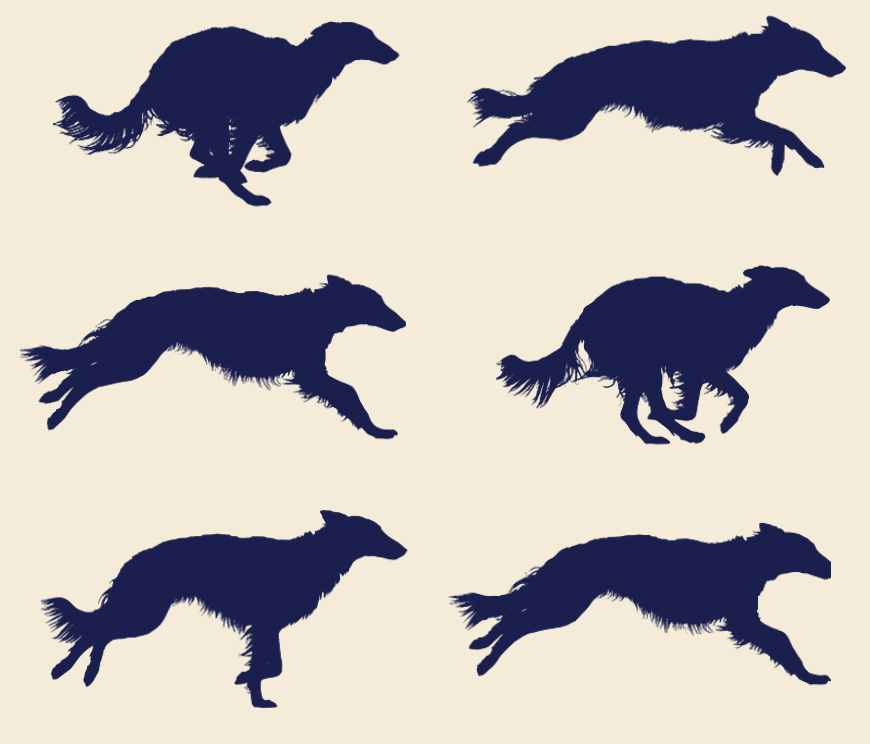
Real motion reference + Nano Banana for the art + Claude Design for the polish. Three tools, one good dog.
2. The map, and the return of the confident wrong answer
Remember the opening? Here’s where it bit me. The site needed a map of hotels, RV parks, vets, and trails near the venue. I asked for one, and Claude cheerfully dropped pins all over Colorado, with that same calm confidence. The trouble was that a bunch of the pins were in the wrong places, or at addresses that don’t exist. It had hallucinated geography, the same way ChatGPT hallucinated those Asana menus.
So I didn’t argue with it. I went to a source that actually knows where things are: Google Maps. I built the real list of locations there by hand, then exported the data (a tidy little file format called KML, which is just a map’s contents written down) and handed that to Claude. “Don’t guess. Use these.” The result is a real, accurate, color-coded map you can actually plan a trip around:
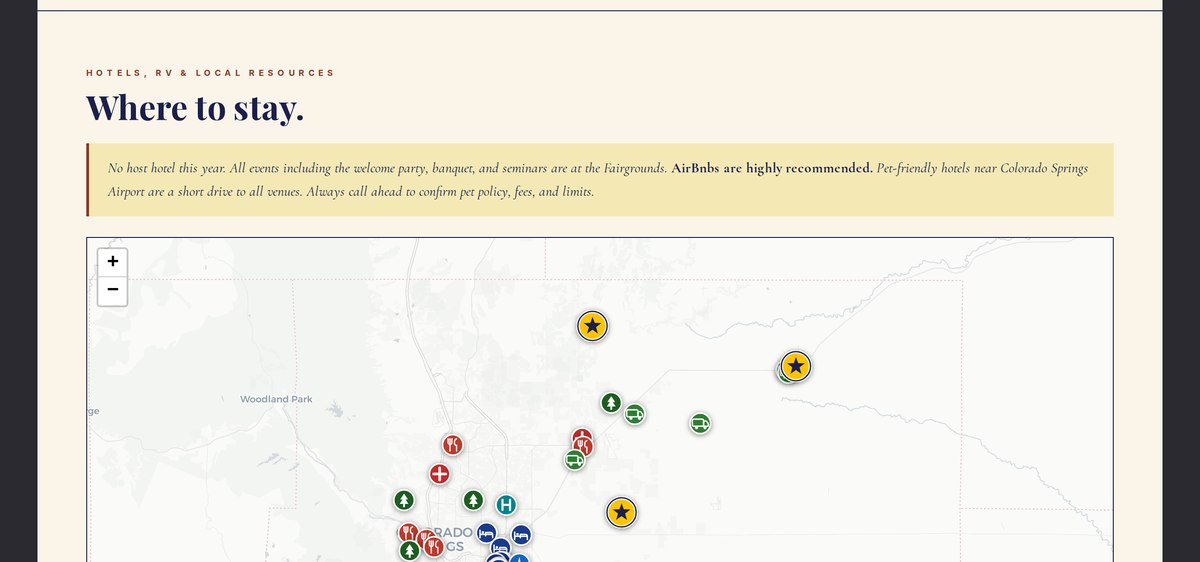
Pins from Google Maps, not from the model’s imagination. The difference is the whole game.
That’s the move worth stealing: when the AI is good at making something but bad at knowing something, you go get the real facts yourself and feed them in. Let it build. Don’t let it remember.
3. What Claude Design actually unlocks
Step back and look at what’s in that site: a full event schedule, entry instructions, a dining guide, a real map, and a working fundraiser where people can pick a trophy to sponsor and the total ticks up as money comes in. That last one is its own little app, and it took an afternoon:
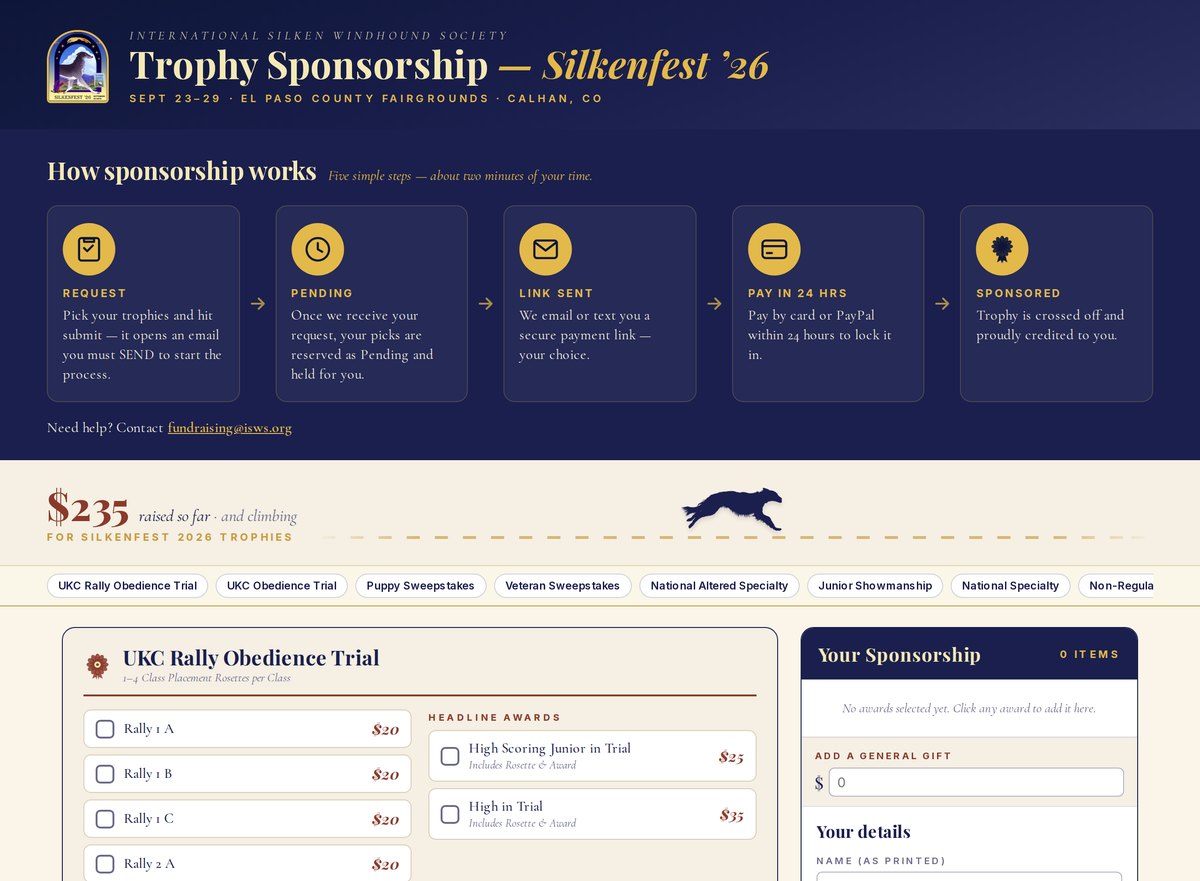
The trophy fundraiser. And yes, that’s our dog galloping across the progress bar. (Click to open it.)
The thing Claude Design really unlocks isn’t “websites.” It’s the gap between an idea and a real, working version of it. The part that used to require money, a specialist, and three weeks of waiting now requires an afternoon and the willingness to be clear about what you want. You don’t need to know how it’s built. You need taste, a little patience, and the good sense to fact-check the confident parts.
So no, you probably don’t need to learn to code. But learning to build, to point these tools at something you care about and steer them well? That’s suddenly available to absolutely everyone. Which is the most exciting thing I’ve gotten to say in this newsletter in a while.
In below the fold this week: a little honest accounting of where my older AI experiments have wandered off to, and where I’m spending my time now.
Until next week,
| ◆ Below the fold ◆ |
Some real talk about the projects that have quietly slipped to the back of the shelf.
Where OpenClaw and Hermes Went
For the longtime readers who remember me going on about my little AI agents: OpenClaw and Hermes are both still running. Nothing broke, nobody got fired. They just quietly faded into the background of my days. They hum along, doing their small jobs, and I’ve mostly stopped thinking about them, which, depending on how you look at it, is either the saddest thing you can say about a project or the highest compliment you can pay one. Good infrastructure is supposed to disappear.
The honest reason is that my attention drifted. Lately I’ve been spending nearly all of my building time with Claude Code, which is the same family of tool that made the Silkenfest site possible, just pointed at bigger and stranger problems. It’s changed how I work more than anything has in a long time, and I’ve got a few things cooking with it that aren’t quite ready to show. I’ll have more for you soon. For now I just wanted to be straight with you about the trajectory: the old experiments taught me a ton, they’re still alive, and the center of gravity has moved.
That’s the whole point of doing this in public. You get to watch which ideas have legs and which ones gently lie down in the corner. If you made it this far, here’s a word from Alice, who understood something about outgrowing the person you used to be.
“It’s no use going back to yesterday, because I was a different person then.”
— Alice in Wonderland